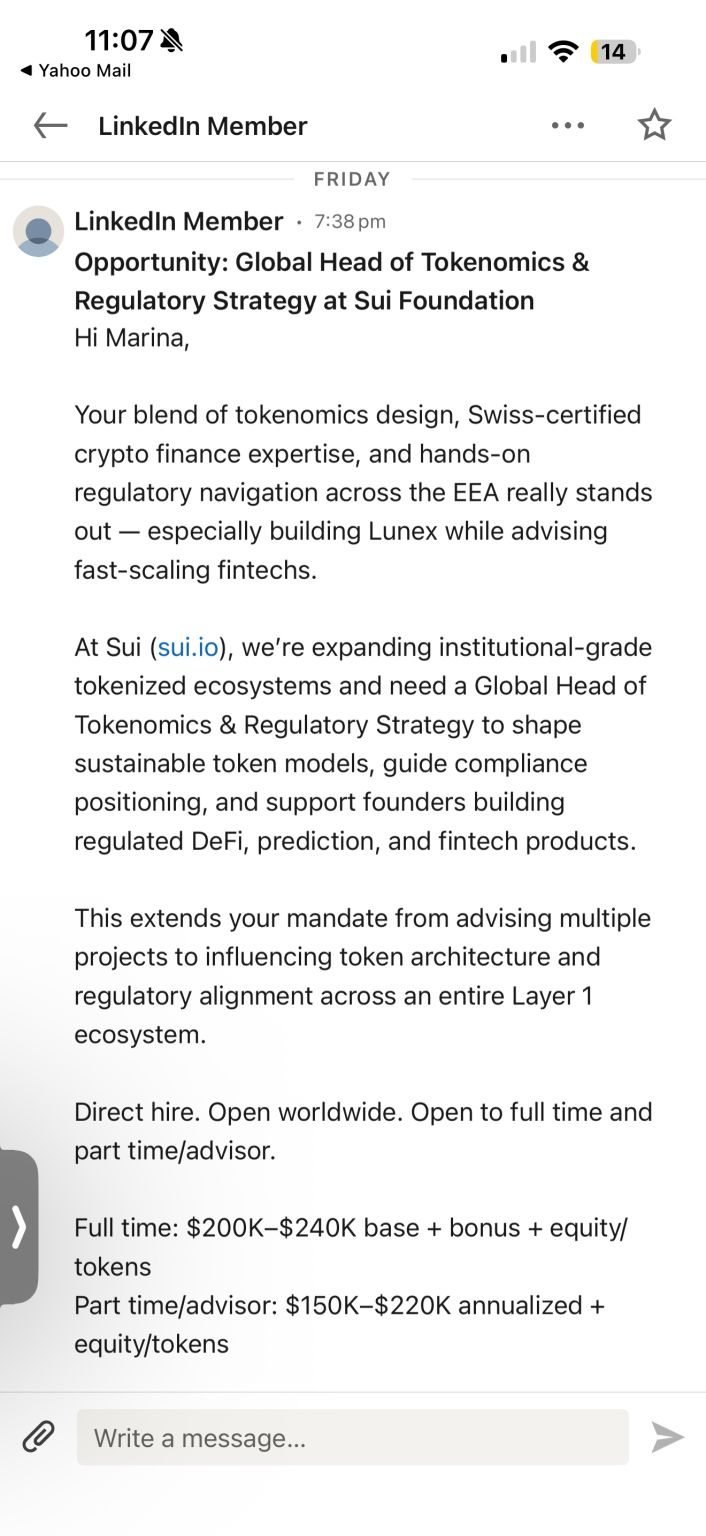
Most people in crypto are used to the classic scams — unsolicited "investment opportunities" landing in DMs, too-good-to-be-true yield offers. Lately, a different pattern has been showing up: scammers using recruiting itself as the entry point.
The setup is designed to look credible. The message matches your actual function — in one case, a role blending tokenomics and compliance — the title sounds senior, the copy is polished, and the compensation is attractive. Had the conversation continued, the likely next steps would have followed a familiar script: a request to send a CV (a clean way to harvest personal data for reuse in future attacks), a "quick interview" on an external platform or messenger, and eventually a link asking you to log in, install something, or "verify" your identity.
What the fake "interview platform" is often actually doing
- Phishing credentials through a fake SSO flow (Google, Microsoft or LinkedIn login pages)
- Pushing a fake "video client" or browser extension designed to steal cookies and saved passwords
- Sending a "test task" file that's actually malware
- Hijacking a calendar or email flow through a malicious meeting invite
- Working toward a direct payment ask — a "verification fee," "background check," "visa processing" or "equipment deposit"
Red flags worth knowing
- The role combines functions that rarely sit together at a real company — an unusual org-chart pairing, even if plausible as an individual skill set
- Zero mutual connections with the "recruiter"
- The outreach reads as AI-generated end to end, including a list of your own "talents" phrased the way no recruiter actually writes
- Salary is disclosed upfront, unprompted
- Messages arrive outside normal business hours, including weekends
- The recruiter's profile has almost no genuine activity — a handful of likes, often from accounts with no real connection to the industry
None of this requires new tooling to defend against — just the same instinct that applies to any unsolicited financial offer: verify before you engage, and treat "too well-matched to be organic" as a signal in itself, not a compliment.